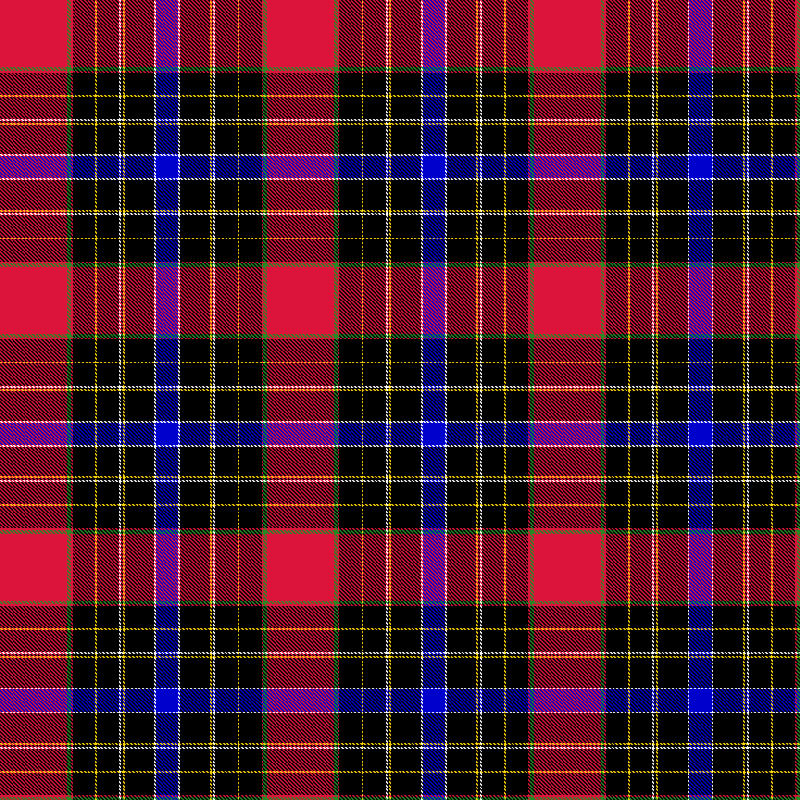
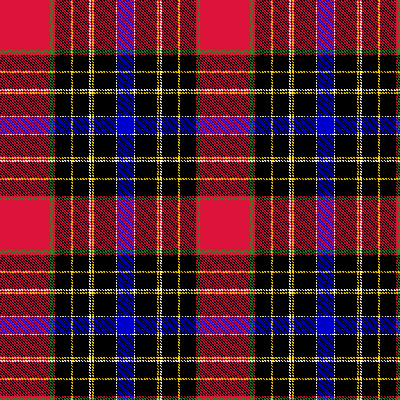
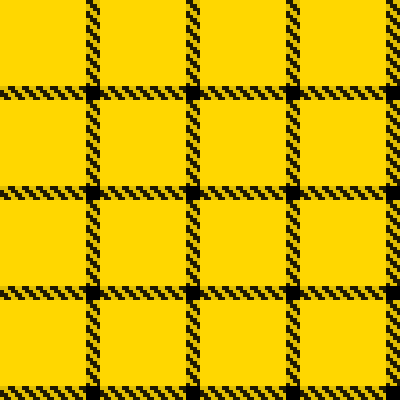
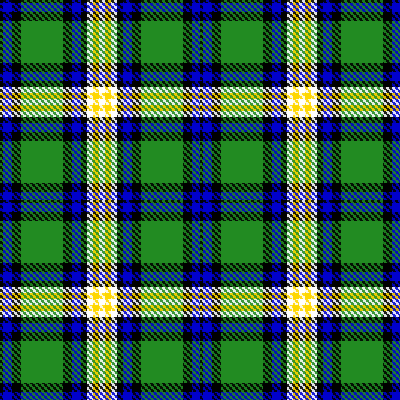
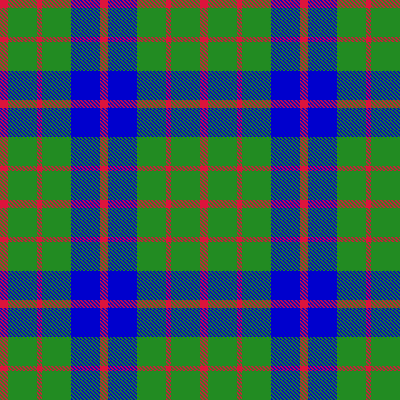
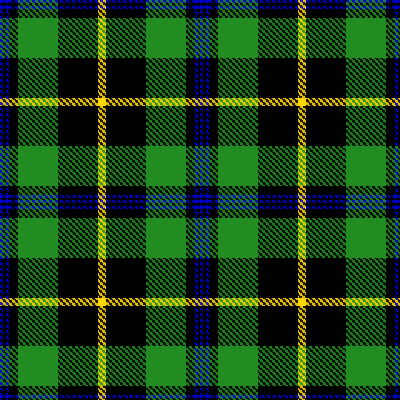
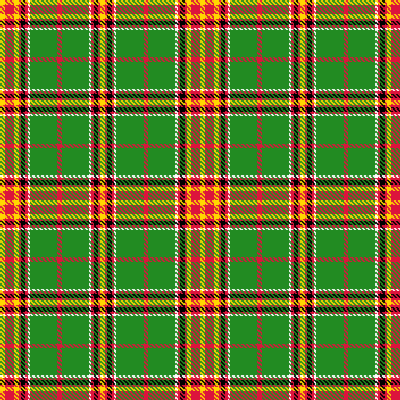
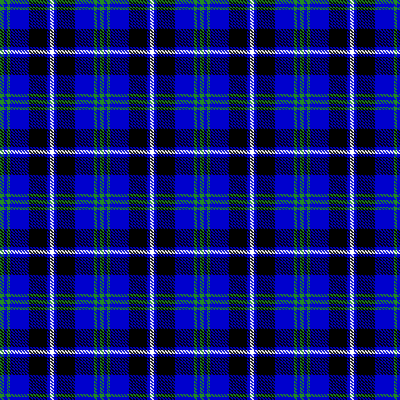
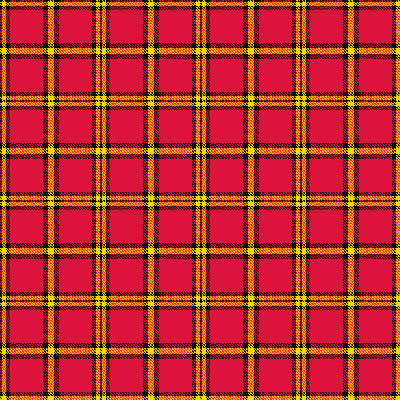
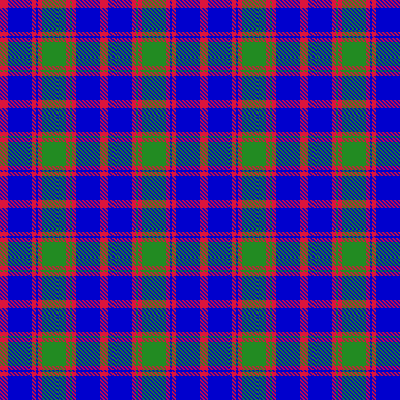
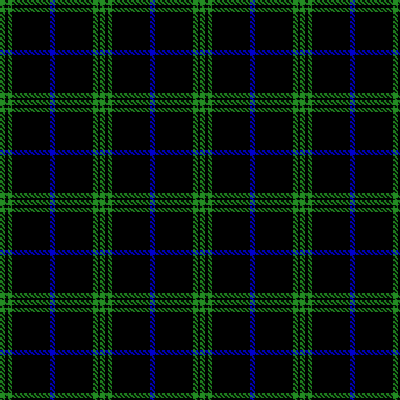
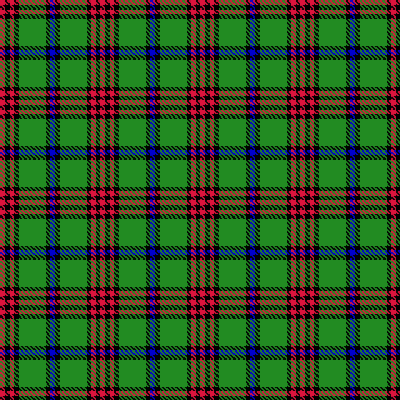
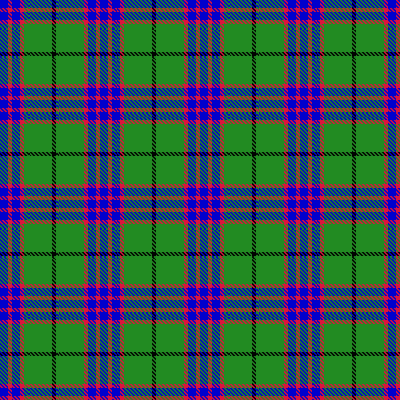
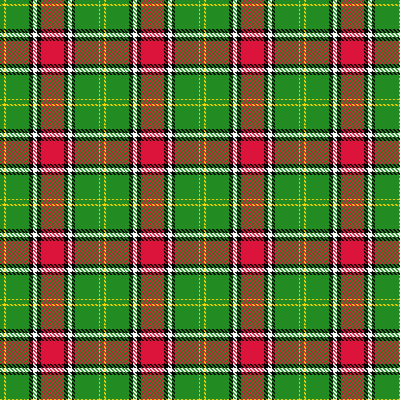
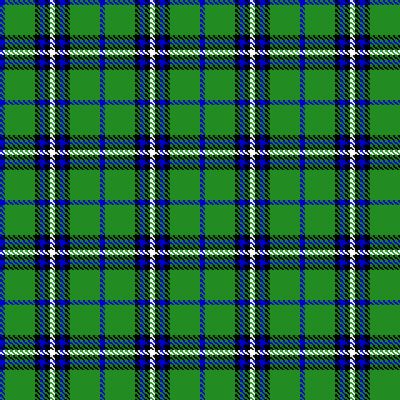
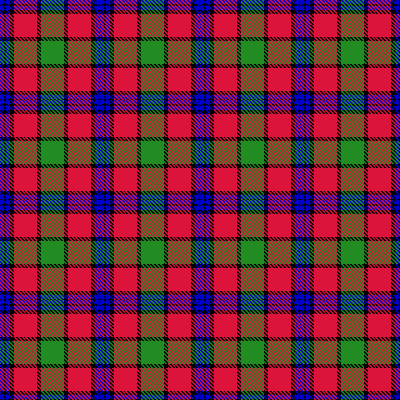
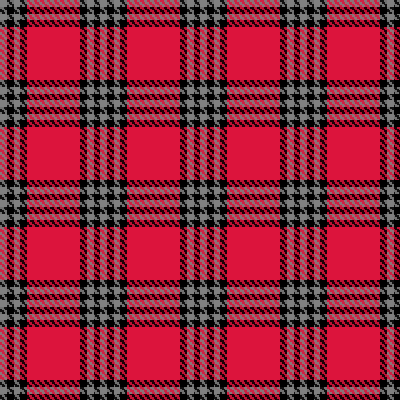
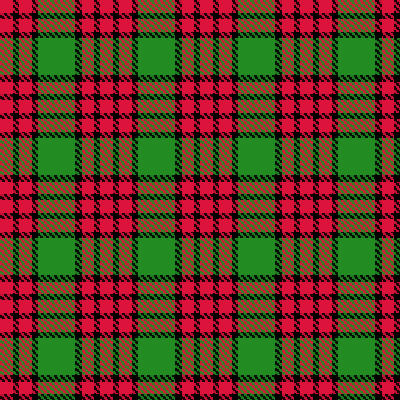
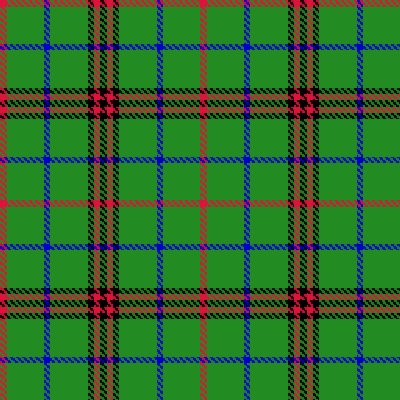
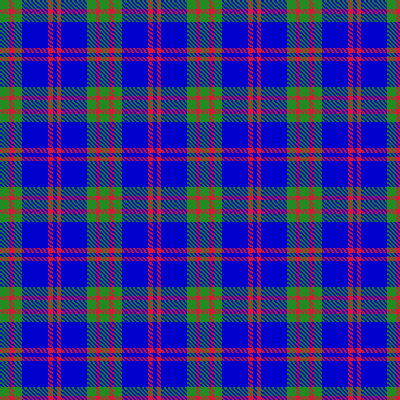
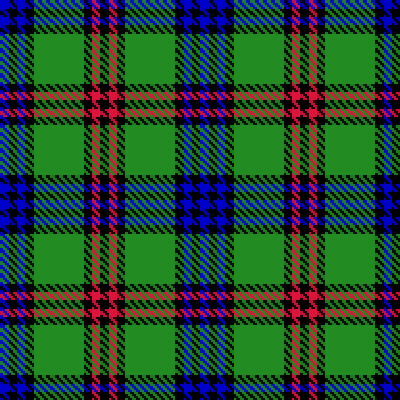
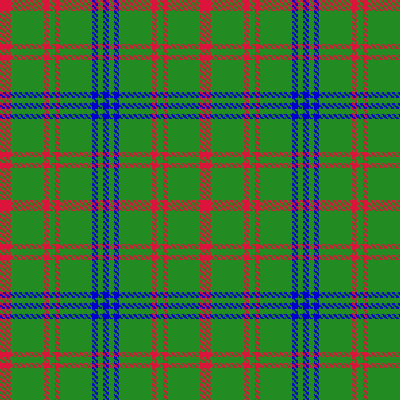
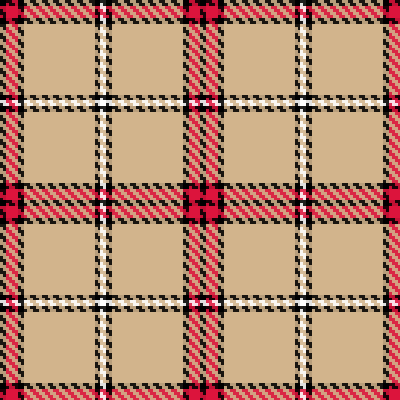
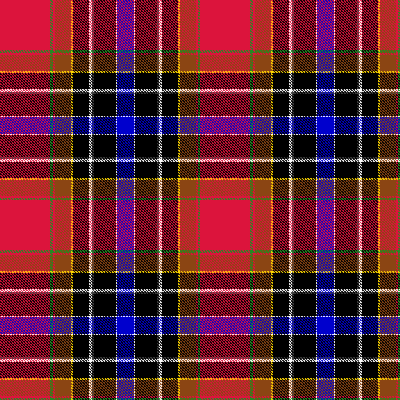
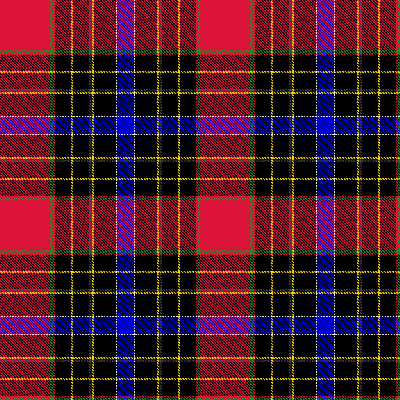
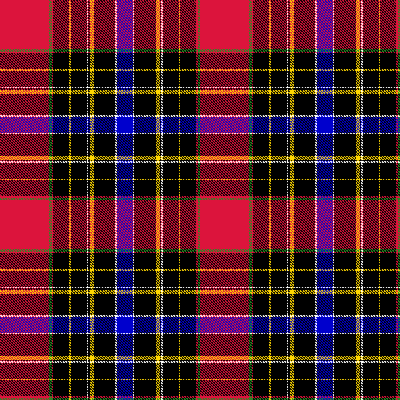
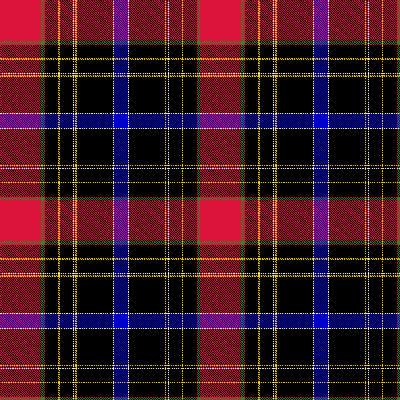
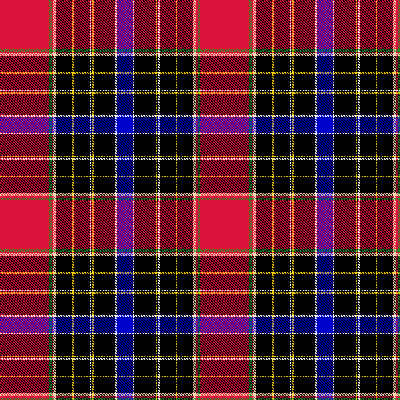
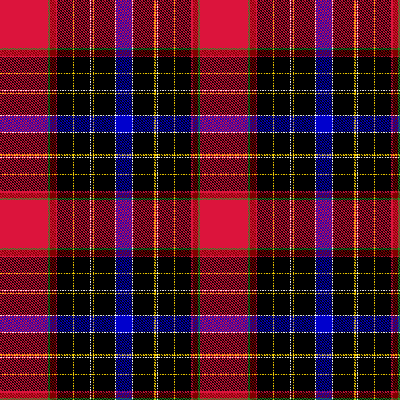
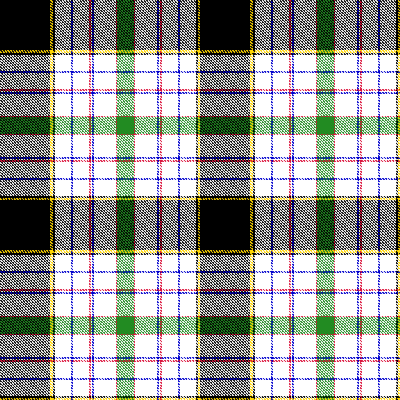
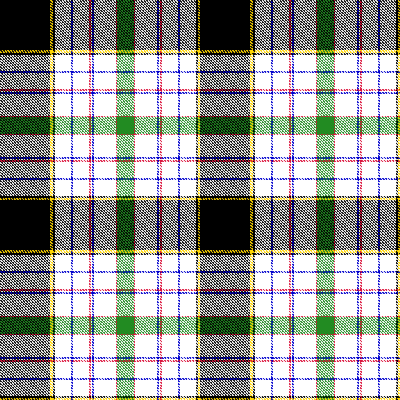
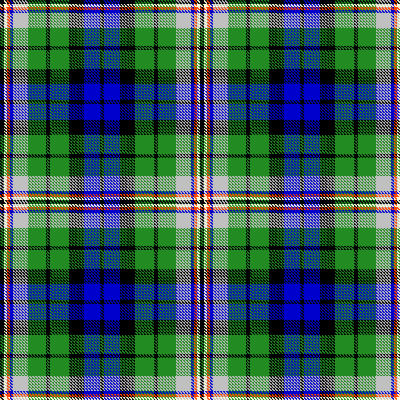
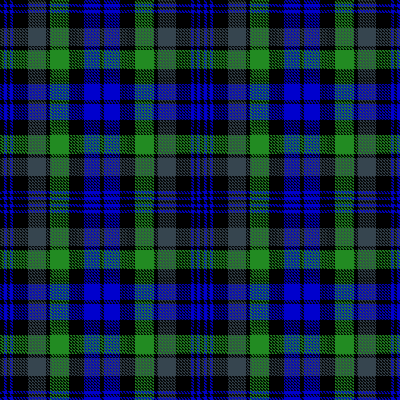
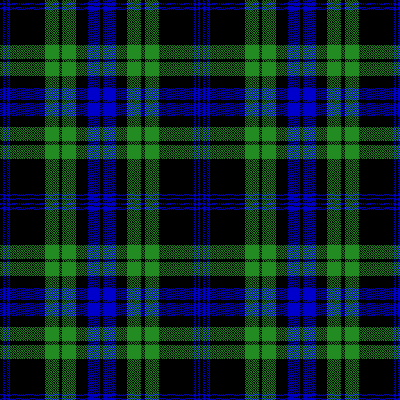
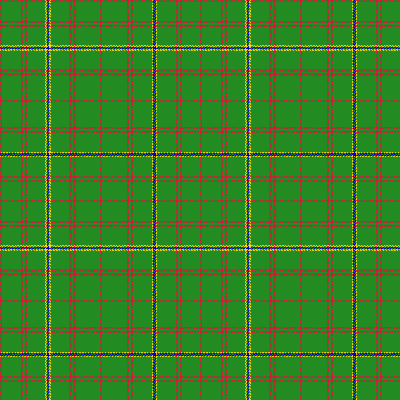
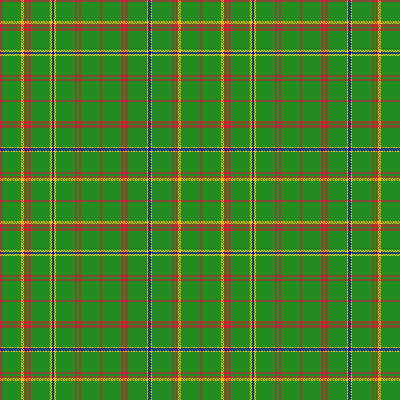
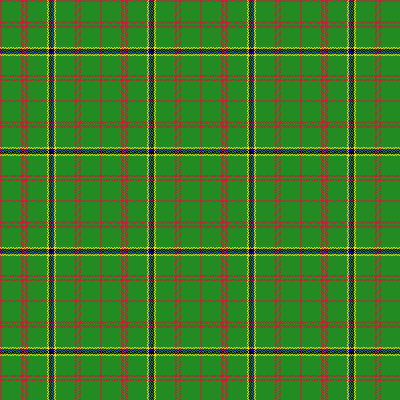
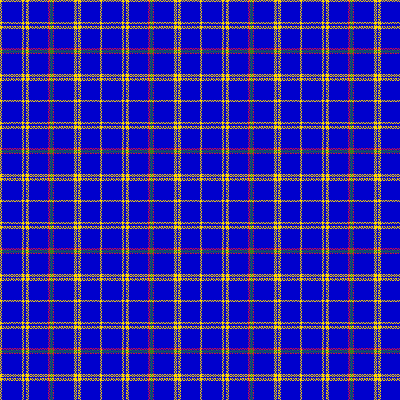
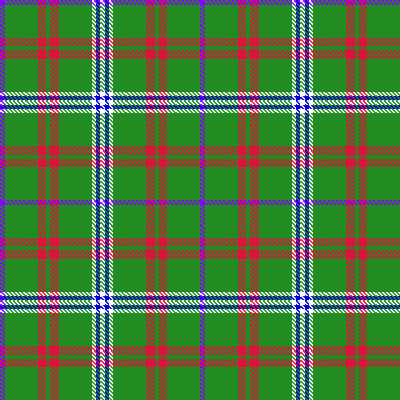
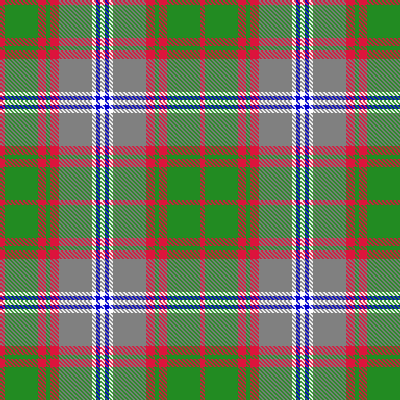
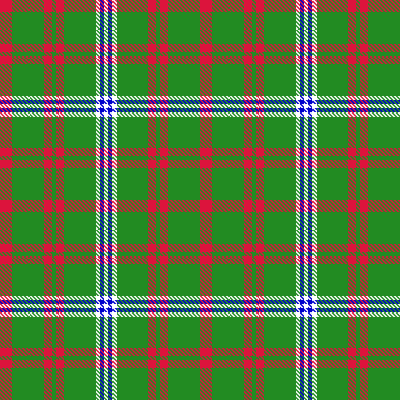
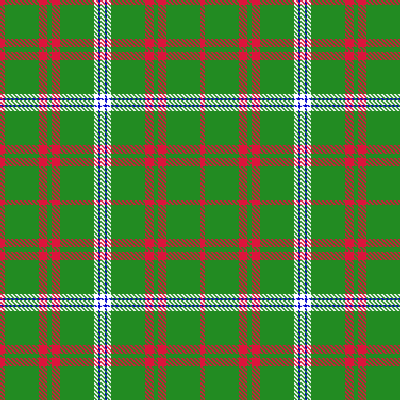
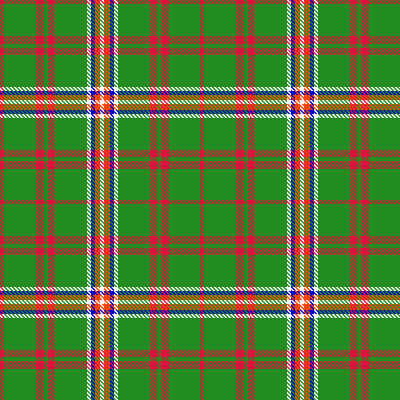
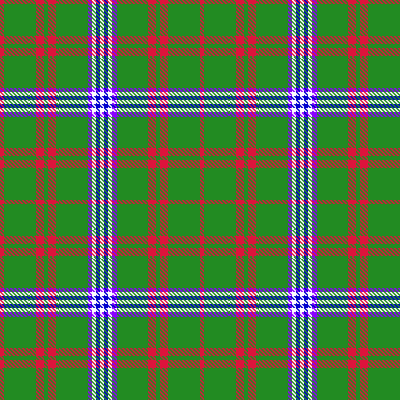
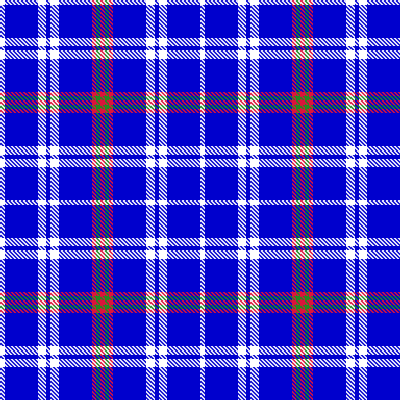
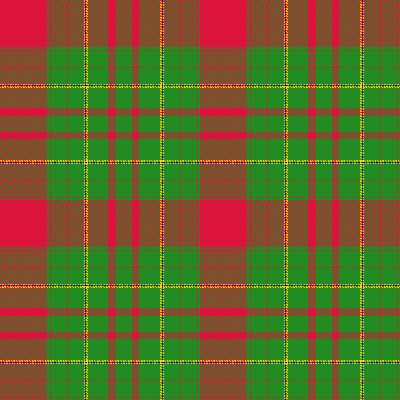
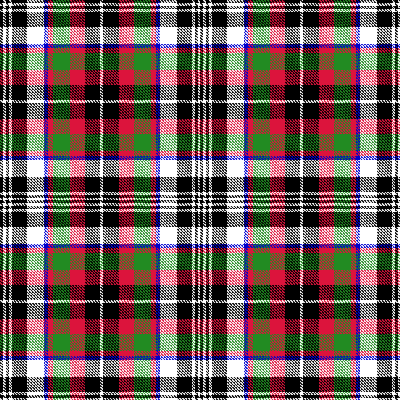
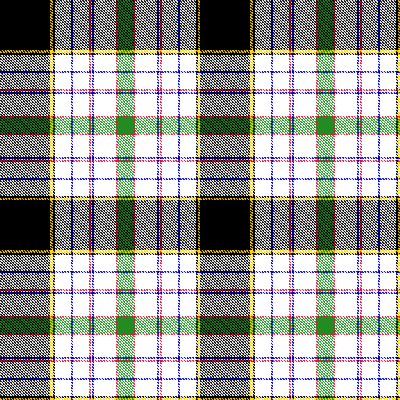
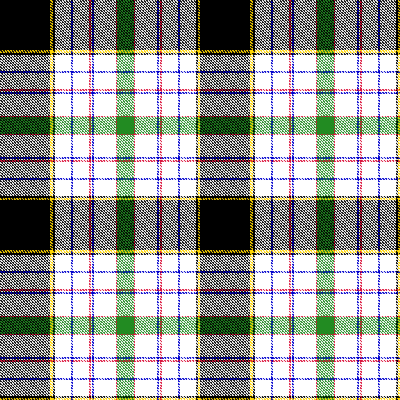
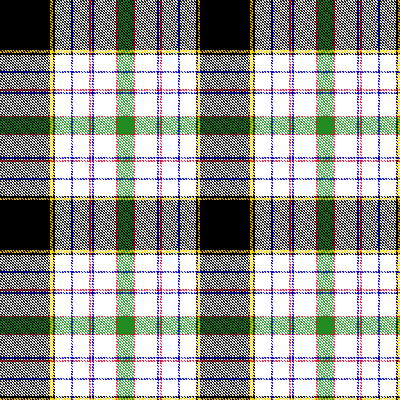
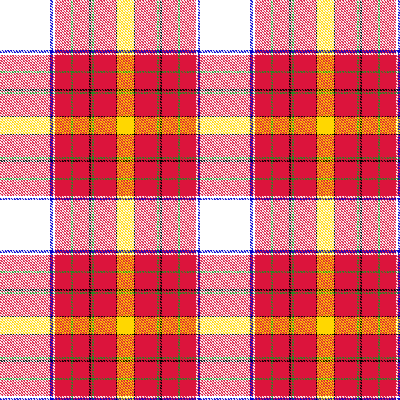
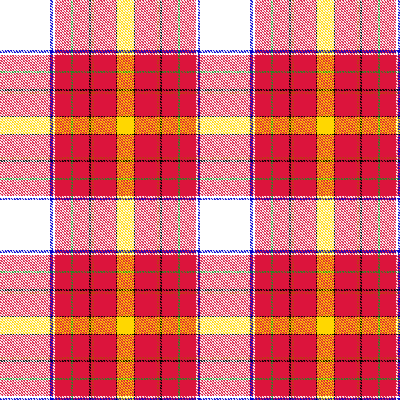
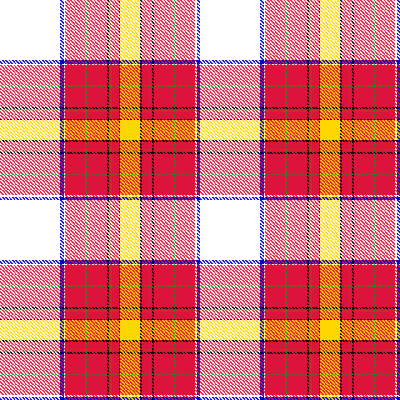
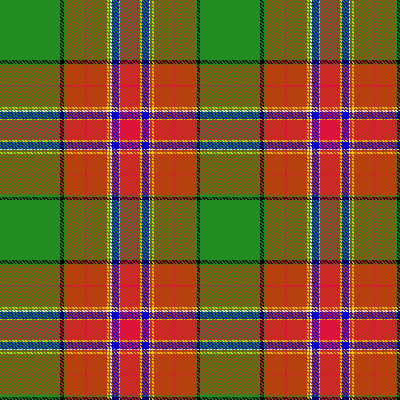
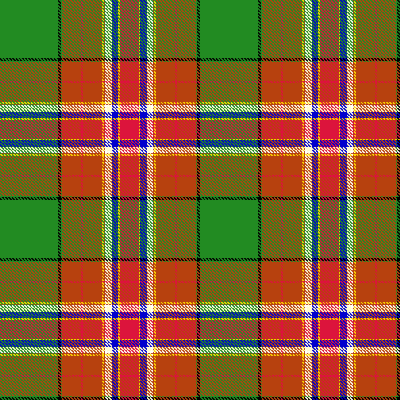
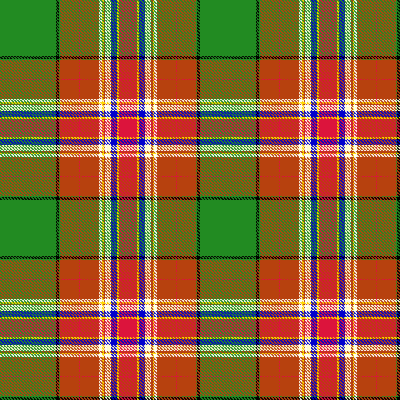
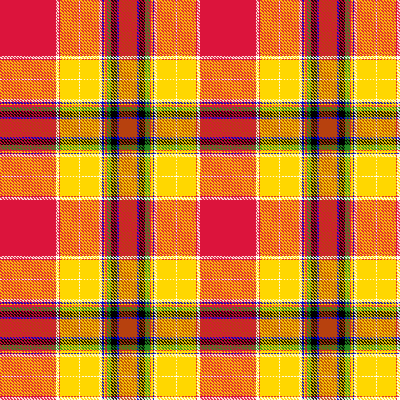
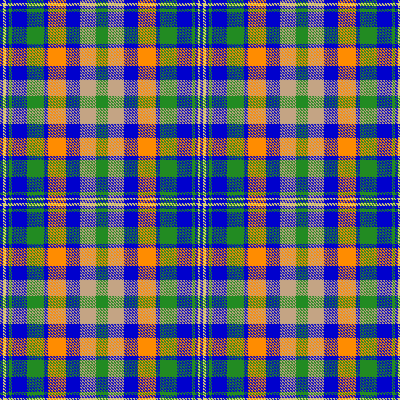
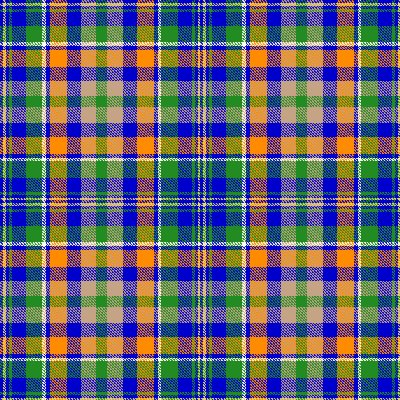
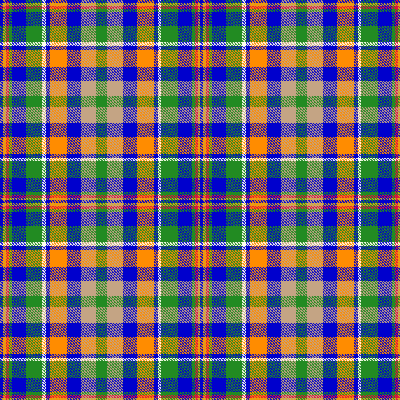
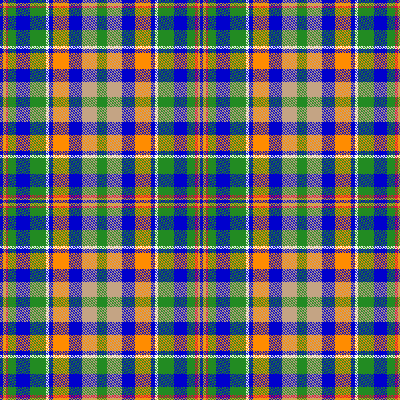
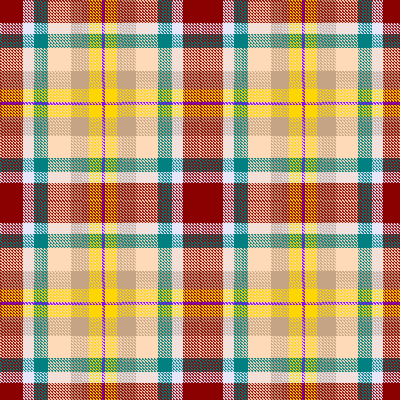
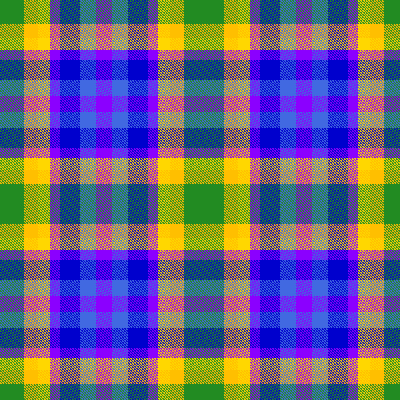
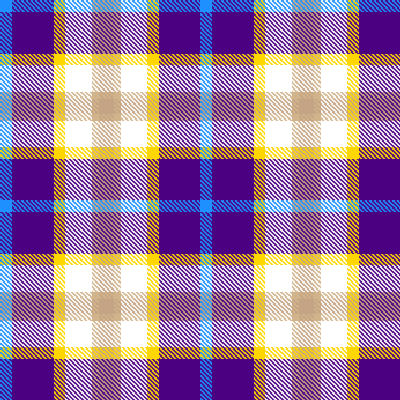
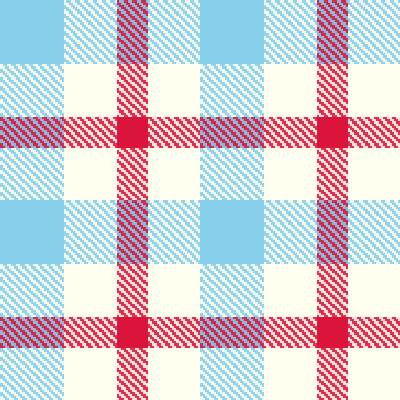
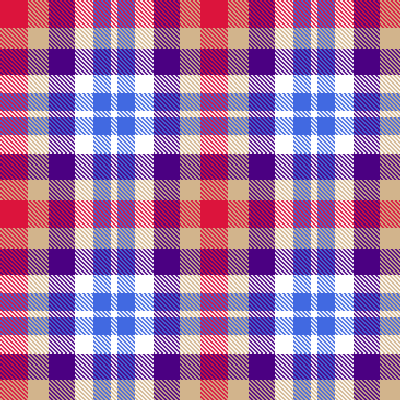
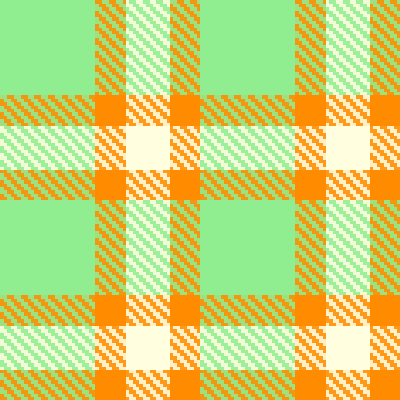
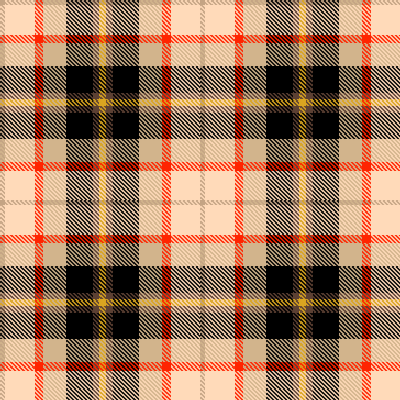
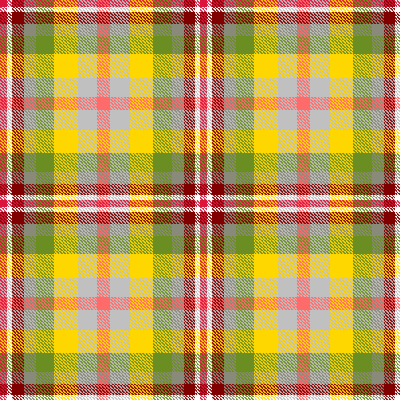
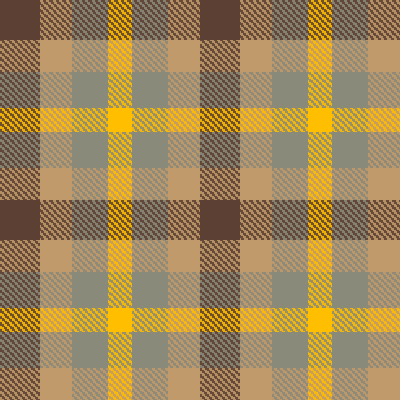
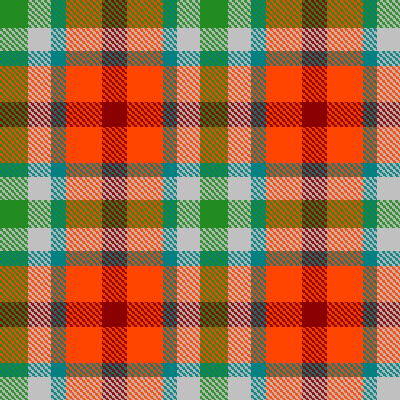
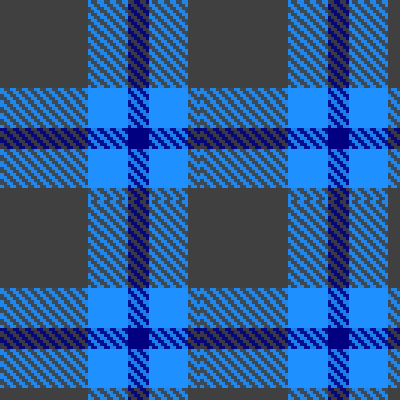
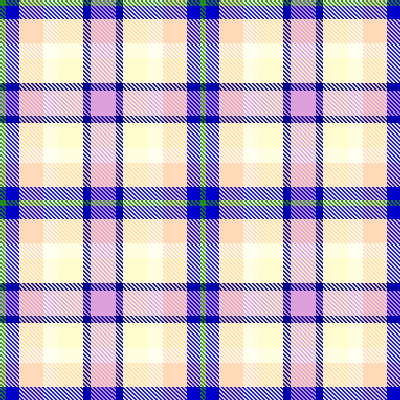
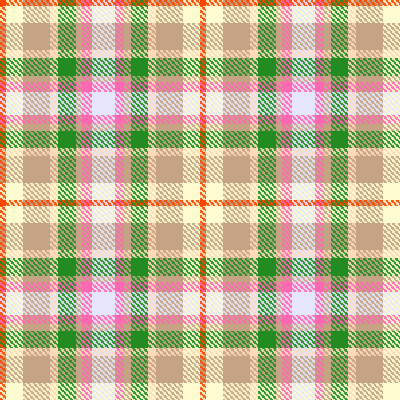
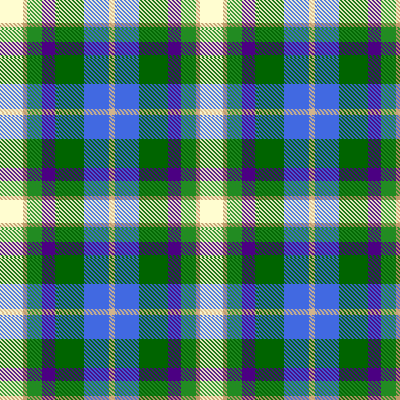
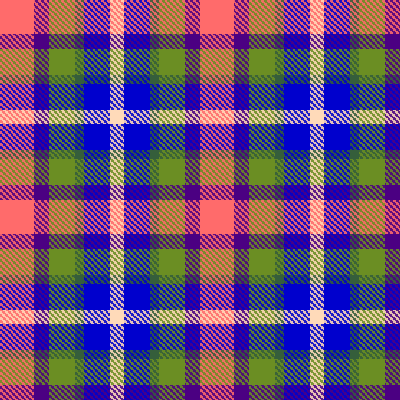
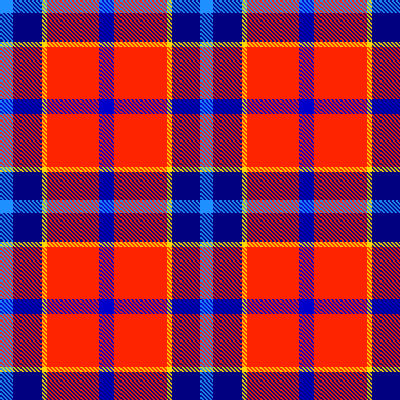
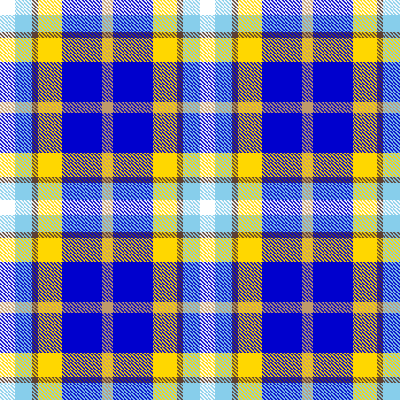
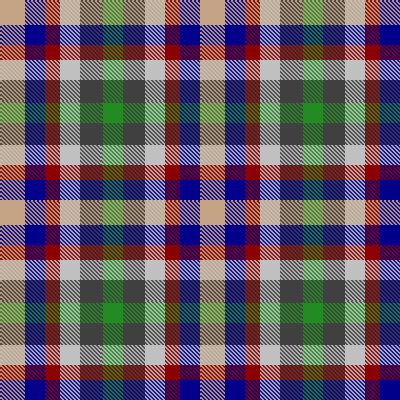
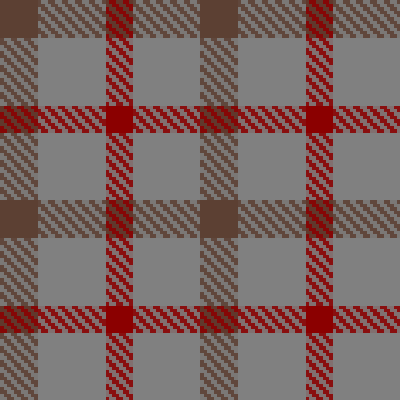
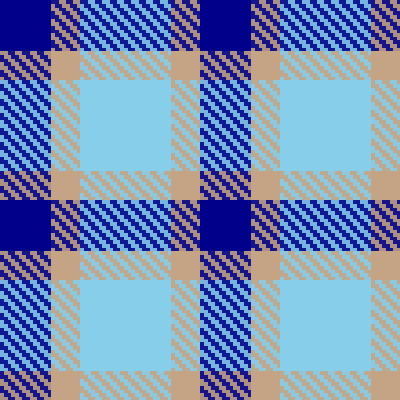
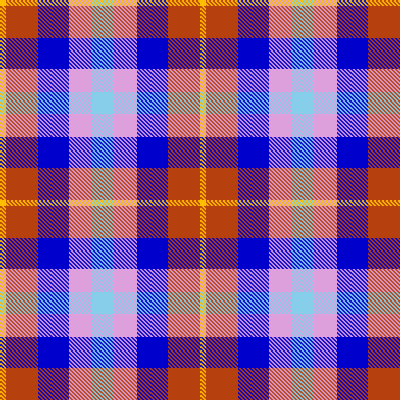
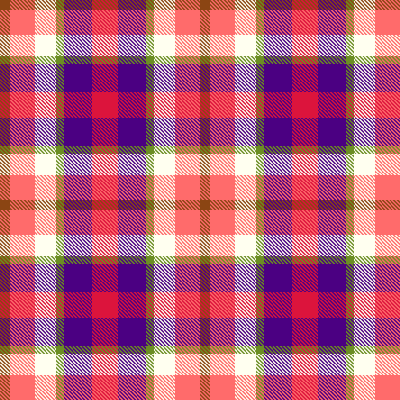
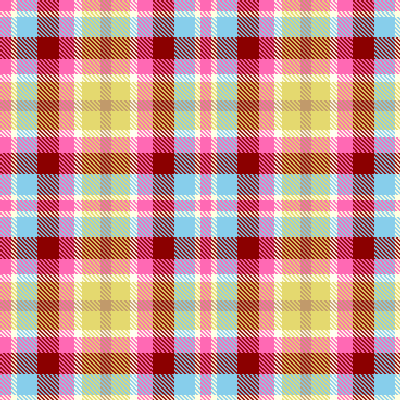
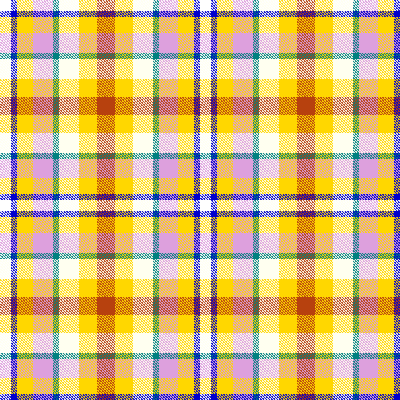
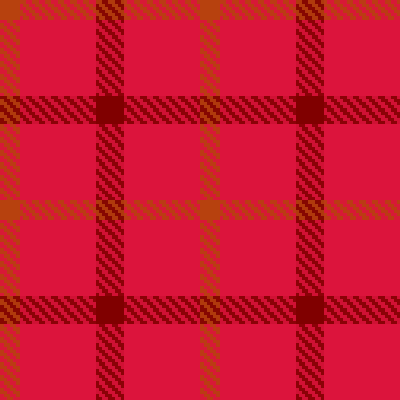
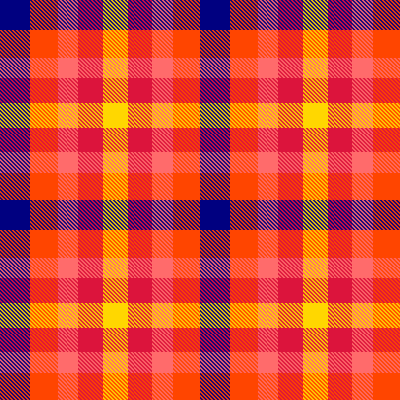
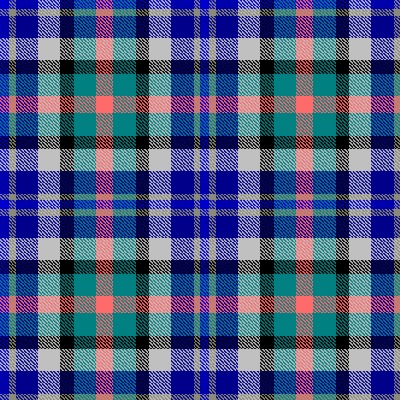
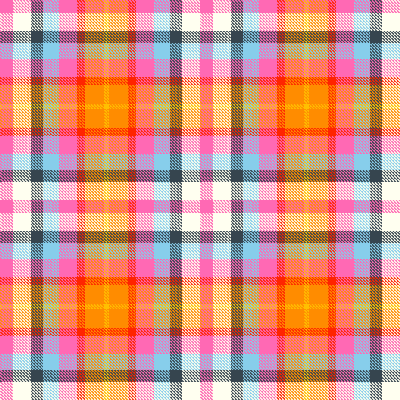
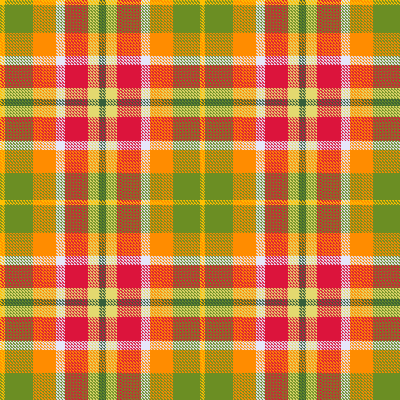
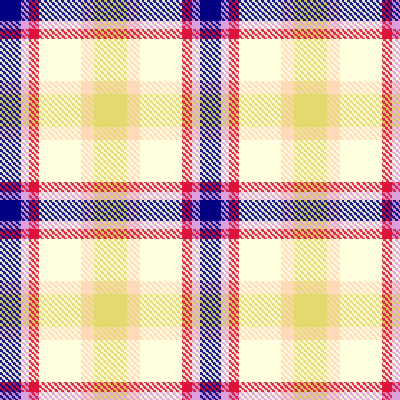
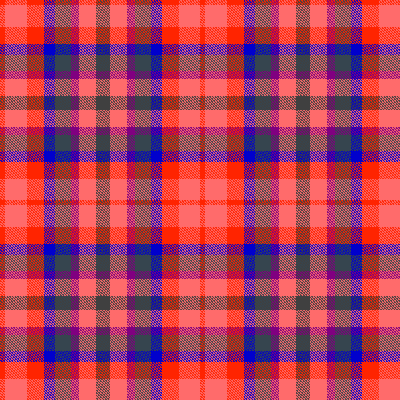
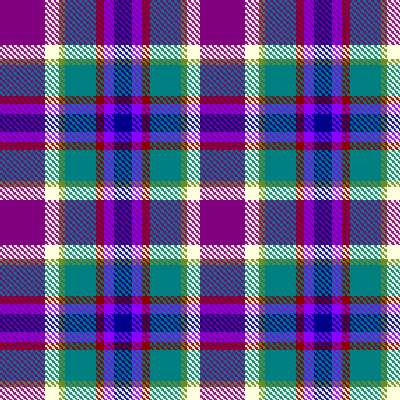
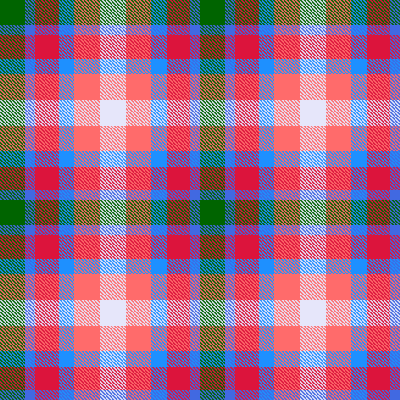
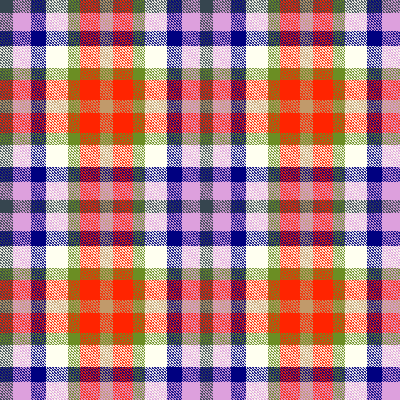
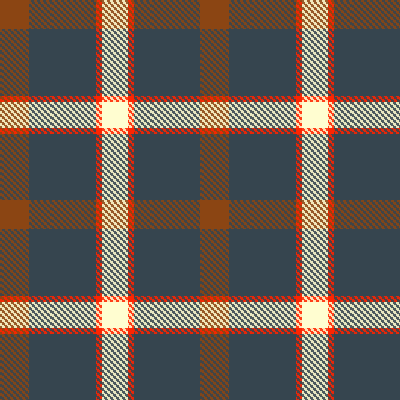
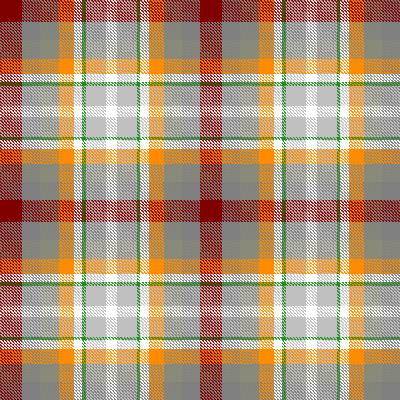
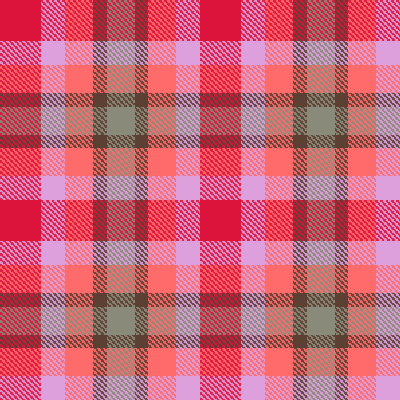
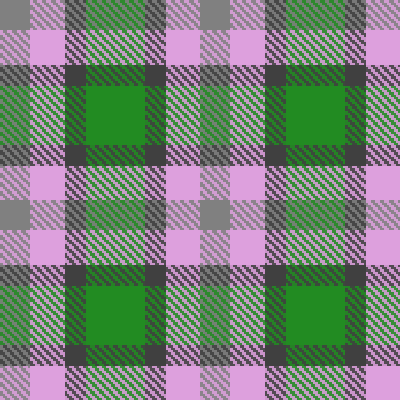
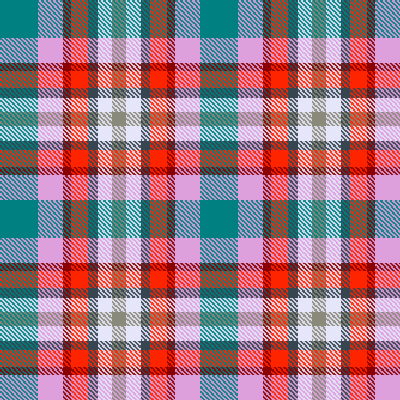
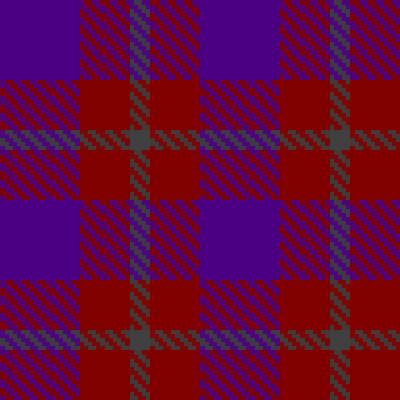
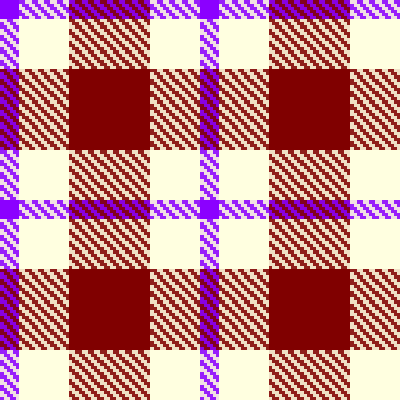
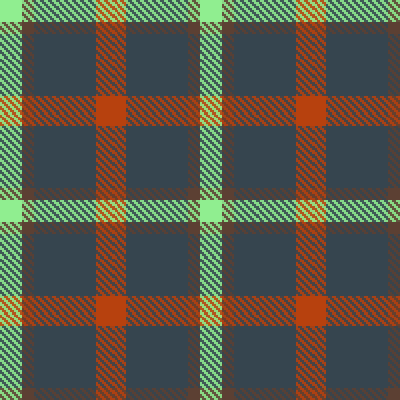
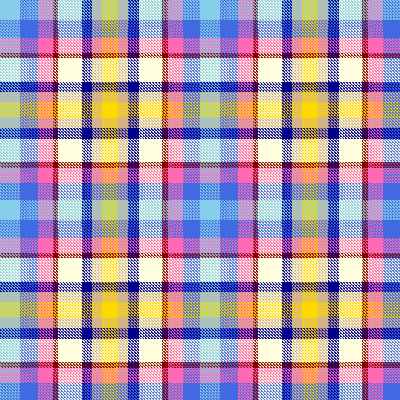
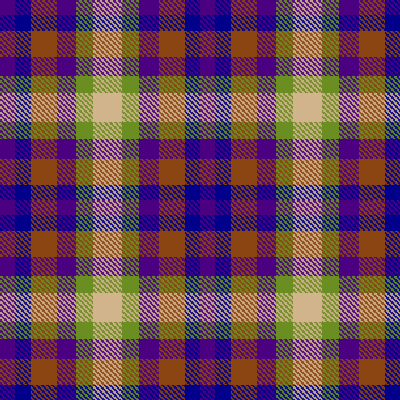
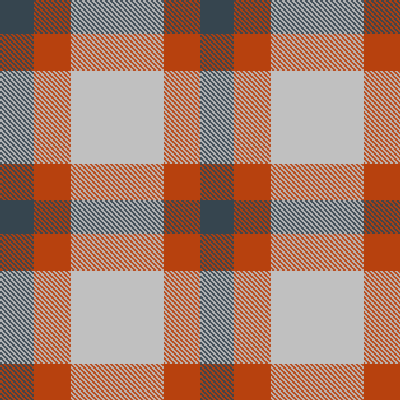
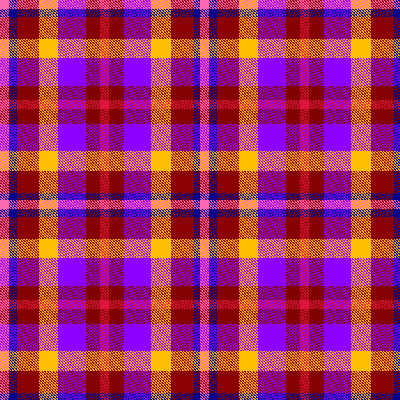
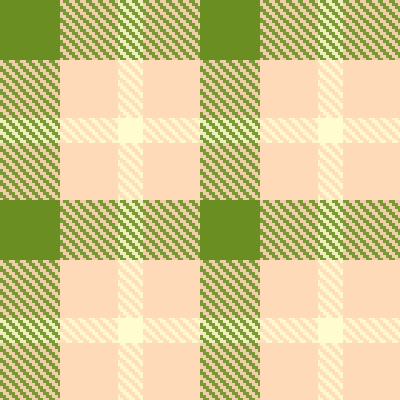
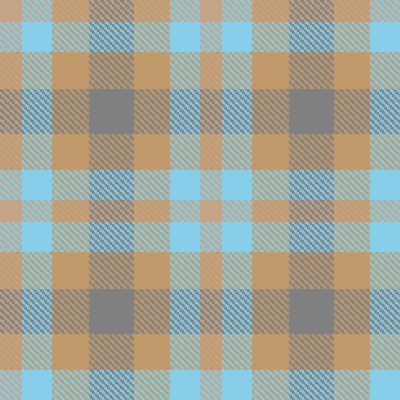
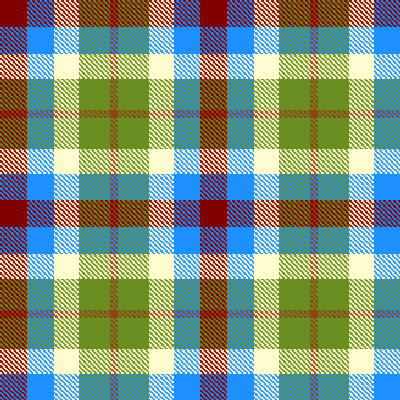
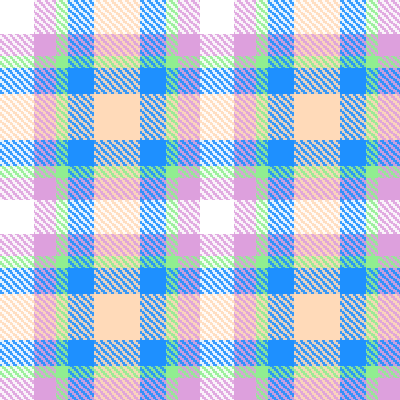
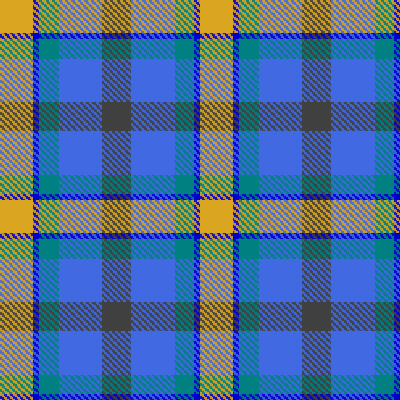
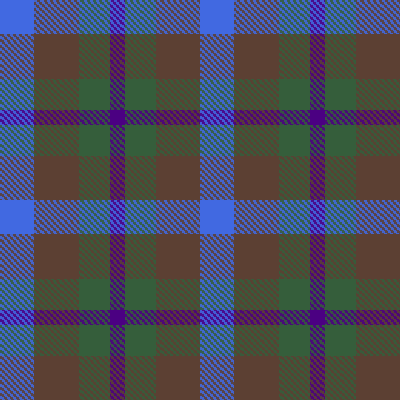
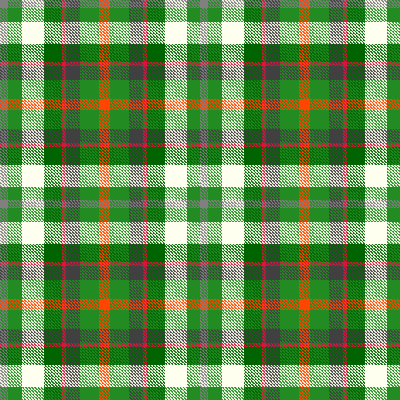
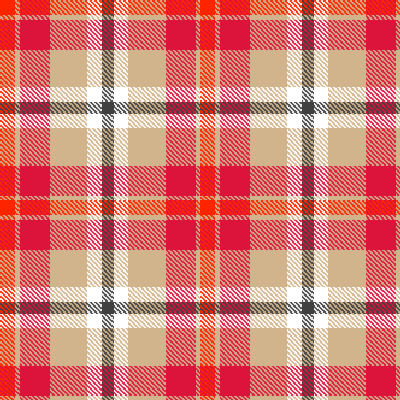
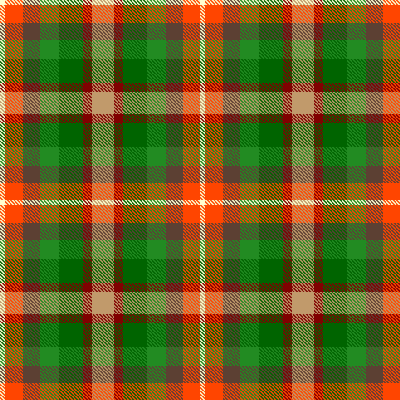
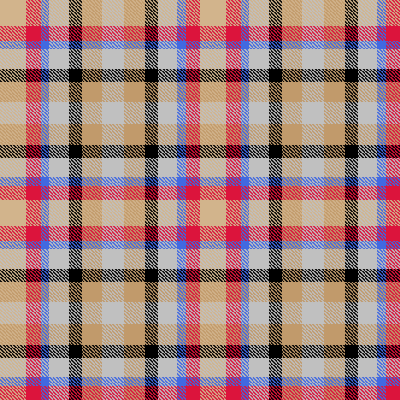
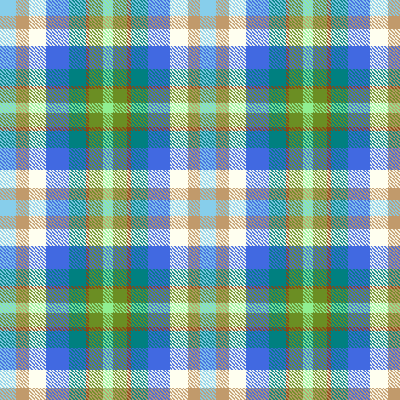
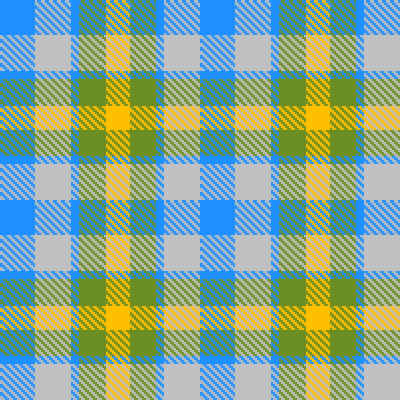
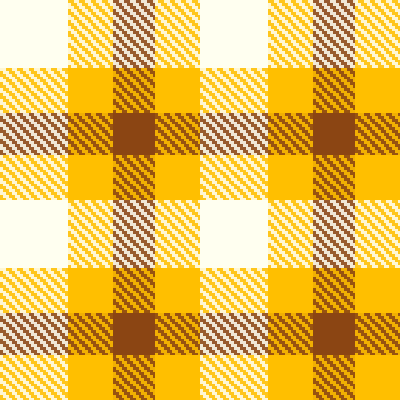
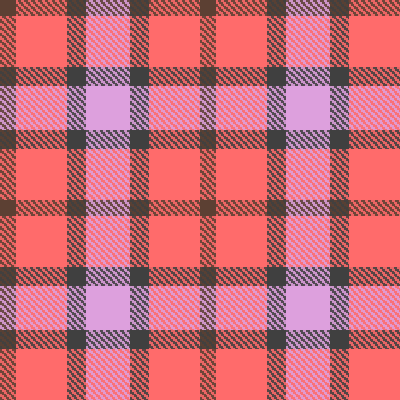
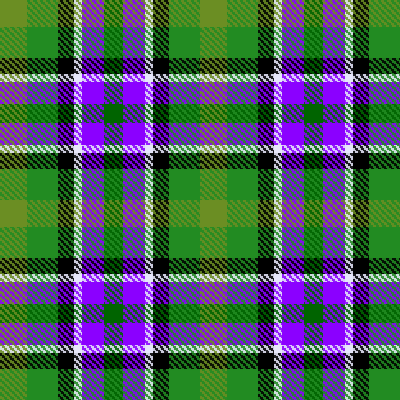
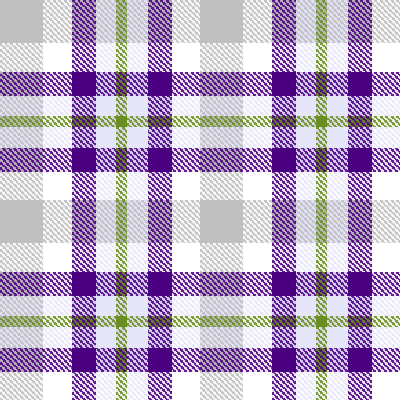
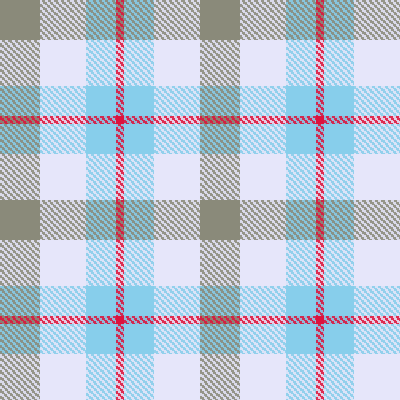
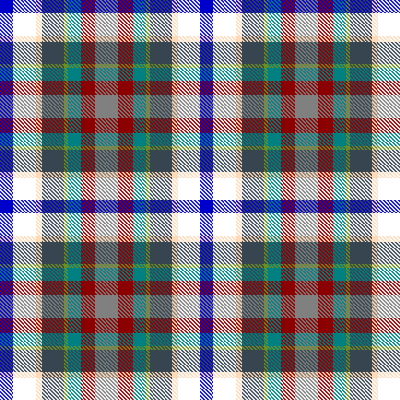
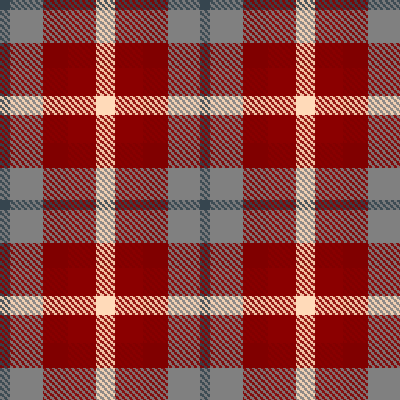
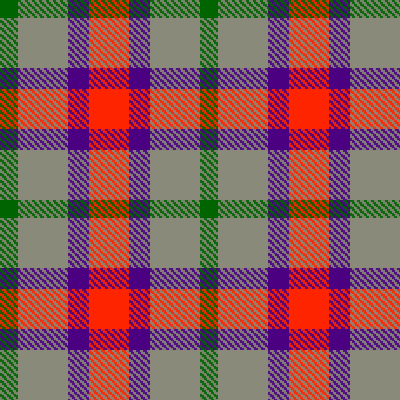
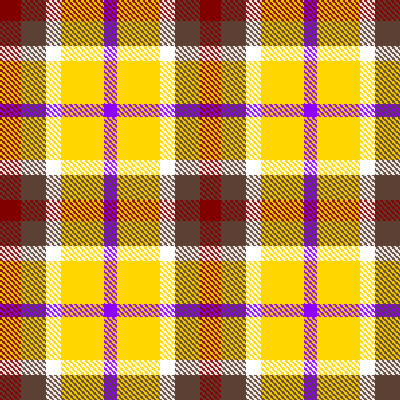
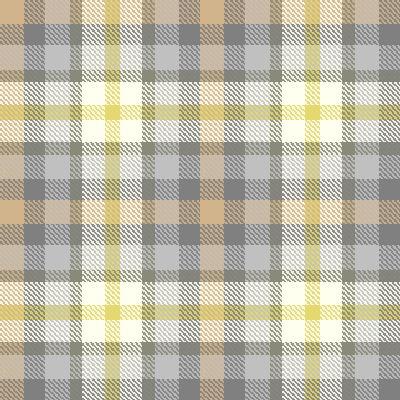
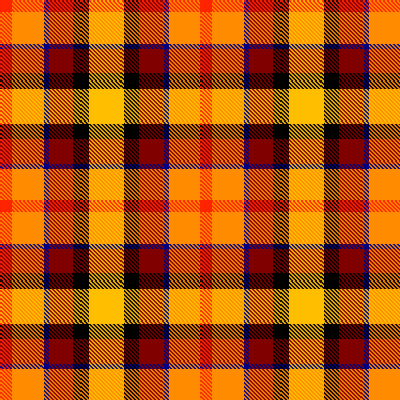
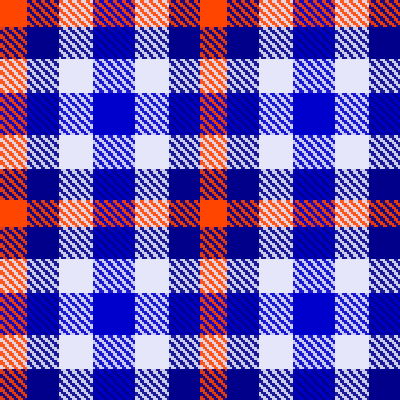
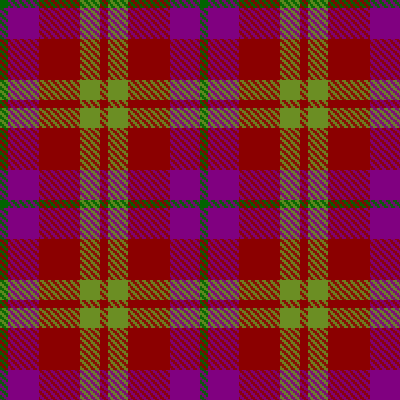
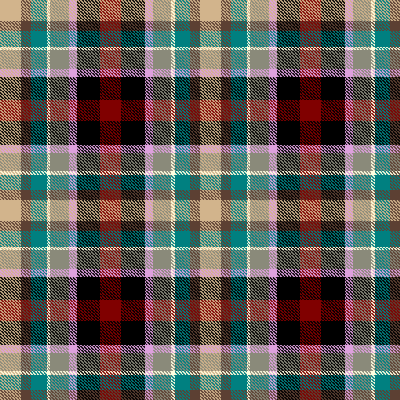
Tartan is not plaid. Plaid is any crossed pattern of colored bands.
Tartan is a specific thing: a symmetric repeat woven
in a twill weave, where the warp and weft share the
same thread count, producing a pattern that is identical along both
axes. That symmetry constraint is what makes tartan tartan. Remove it
and you have check fabric, madras, gingham. All fine. None of them
tartan.
The generator starts here, with this constraint, and builds a
formal system around it. The input is a thread count
notation, the same shorthand used by the Scottish Register
of Tartans since the 19th century. A thread count encodes the full
color sequence of one repeat: color codes paired with counts,
pivoting at each end so the pattern reflects. The notation B/24
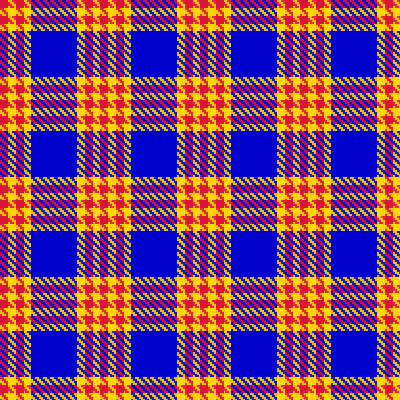
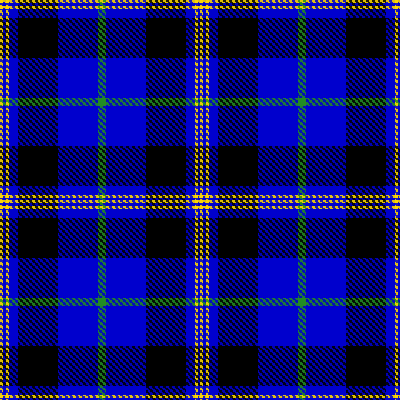
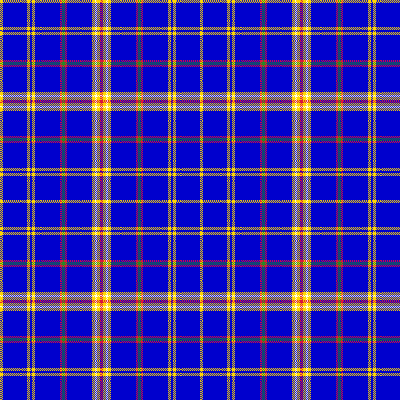
W4 B4 W4 B24 R2 B24 describes a
blue‑dominant sett with narrow white and red accent stripes. The
slash after the first color indicates a pivot point; the pattern
reads forward and then reflects.
From this notation the generator constructs a two‑dimensional
weave. The thread count determines which colors appear at each row
and column. The weave structure determines which
thread is visible at each crossing point: warp on top, or weft.
A plain weave (1/1) alternates every thread: warp over weft, weft
over warp, repeat. A 2/2 twill (the canonical tartan weave) floats
each thread over two, under two, shifting one position per row. This
produces the characteristic diagonal twill line at 45 degrees.
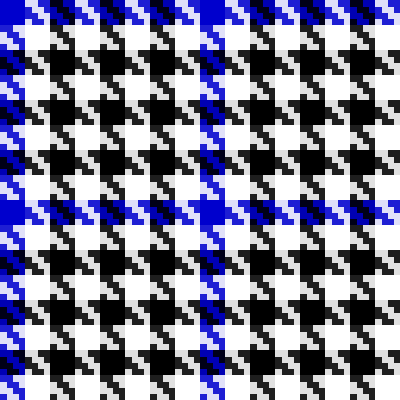
Herringbone is twill with periodic reversal, typically every 4 to 8
threads, creating a zigzag. Hopsack (2/2 basket) groups threads in
pairs for a coarser hand. Satin extends the float length (typically
5/1 or 8/1) and distributes interlacing points to avoid diagonal
lines, producing a smoother surface. Broken twill introduces
irregular reversals at prime-number intervals.
Six Weave Structures
Plain
1/1, the simplest interlacing
2/2 Twill
The canonical tartan weave
Herringbone
Twill with periodic reversal
Hopsack
Paired threads, basket weave
Satin
Long floats, smooth surface
Broken Twill
Irregular twill reversal
Thread Count Notation
Thread count is a compression format. Rather than specifying every
individual thread, you list each color run in order. The parser
reads left to right, expanding each code‑count pair into a
column of the sett. Pivots (marked with a slash) tell the
renderer where the pattern reflects. A full sett is built by
reading the sequence forward, reflecting at each pivot, and
tiling the result across the cloth.
B/24
K4
G24
K4
B24
K24
R6
K24
B24
K4
G24
K4
B/24
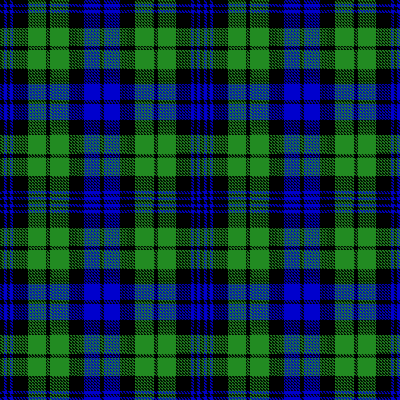
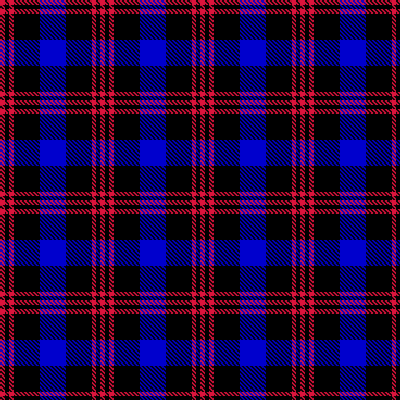
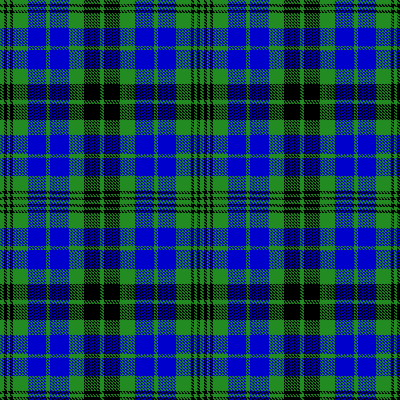
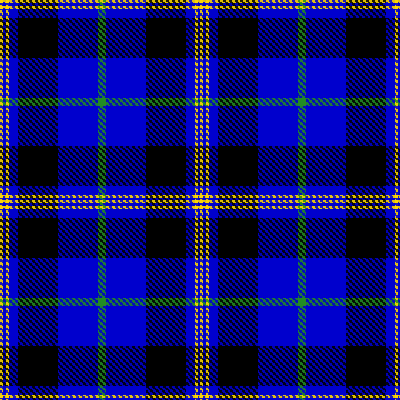
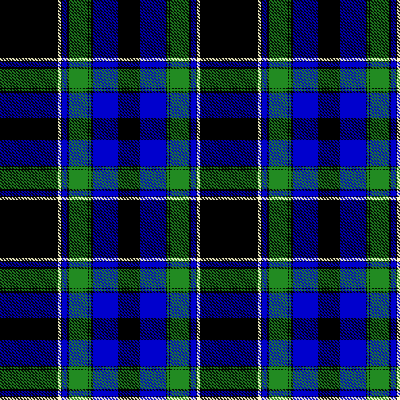
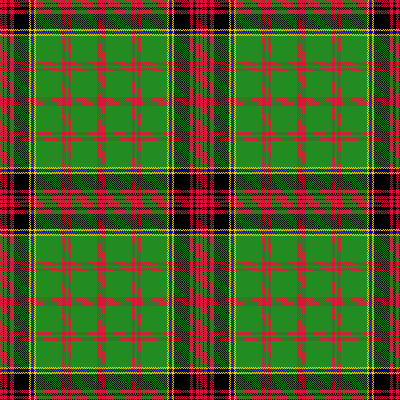
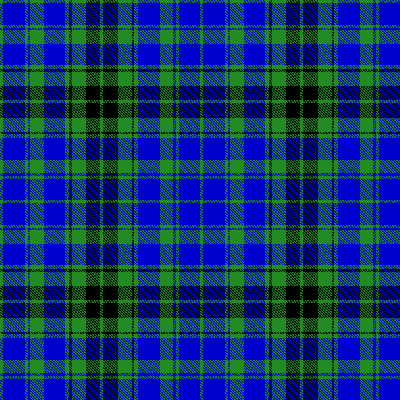
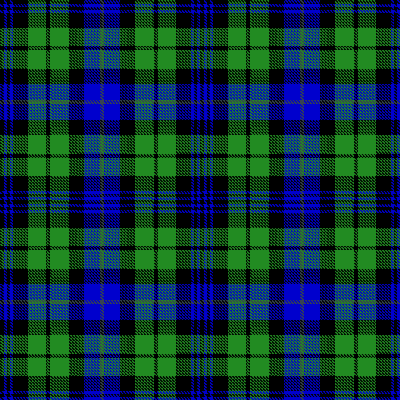
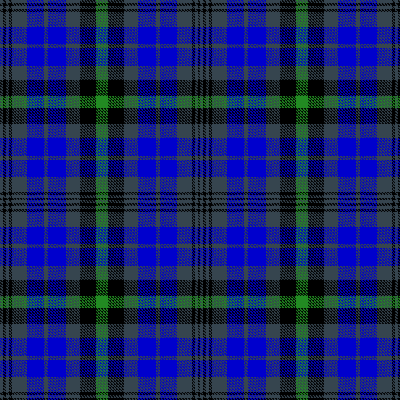
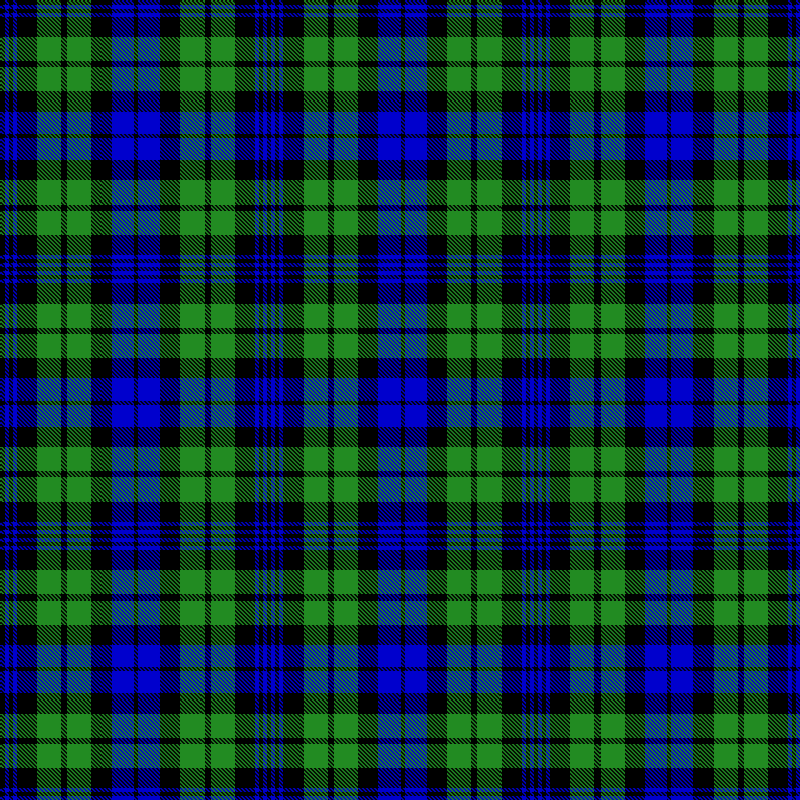
Black Watch (Government No. 1), SRT ref #2268. Sett width: 192 threads.
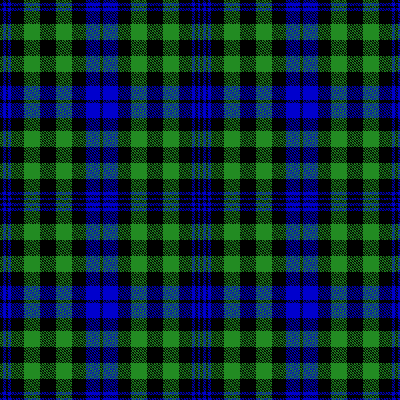
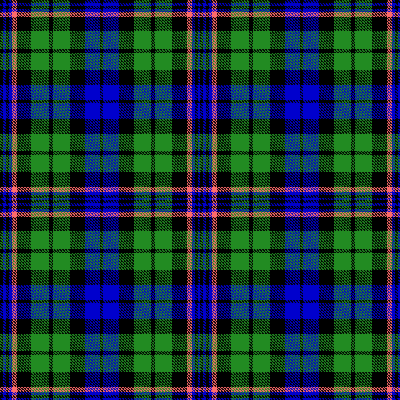
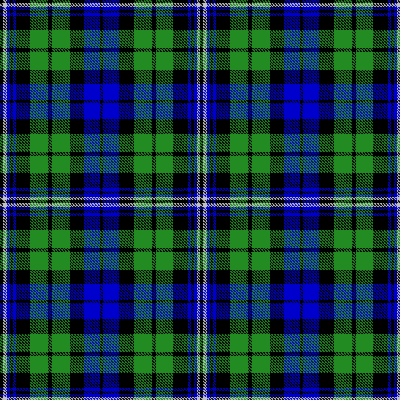
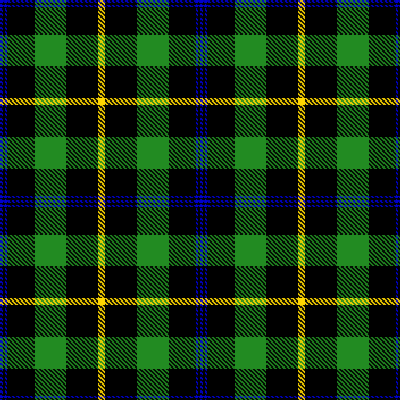
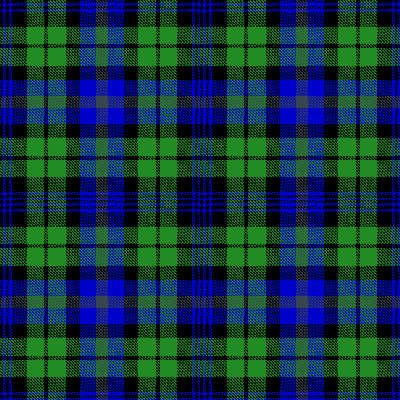
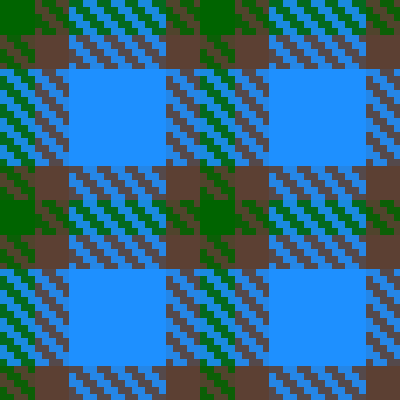
The notation above describes the Black Watch, one of the most
recognized military tartans. Blue and green dominate; a thin red
stripe distinguishes it from the unadorned Government sett. This
is what the generator parses, validates, and renders.
48 Period-Correct Dye Colors
The color palette is drawn from historical Scottish dyeing
practice. Before William Henry Perkin synthesized mauveine in
1856, Highland weavers worked with a constrained set of natural
materials: Isatis tinctoria (woad) and imported indigo
for blues, Rubia tinctorum (madder root) for reds, weld
(Reseda luteola) and broom for yellows, lichen (crottle,
primarily Parmelia saxatilis) for warm browns, onion
skins for gold, and iron mordant over a tannin base for black.
Each color maps to one of the standard STA thread color codes:
B for blue, R for red, G for green, K for black, W for white,
T for brown, Y for yellow, P for purple, N for grey. The palette
includes both "ancient" (muted, pre-1860 vegetable‑dyed)
and "modern" (brighter, post‑aniline) variants.
The Mutation Engine
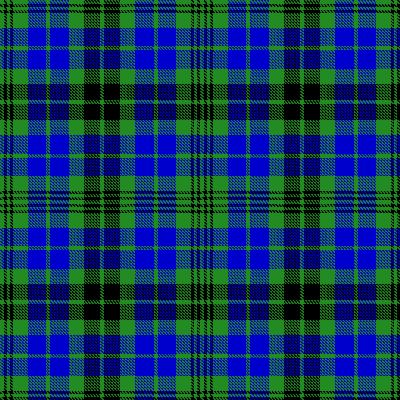
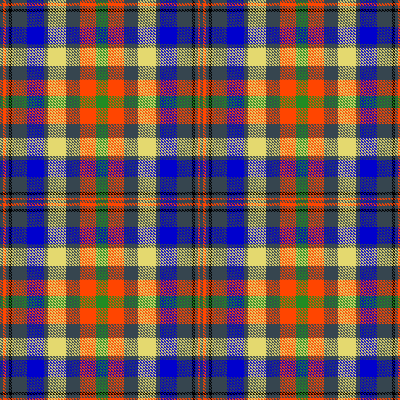
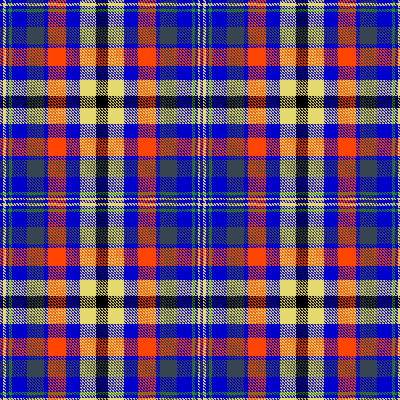
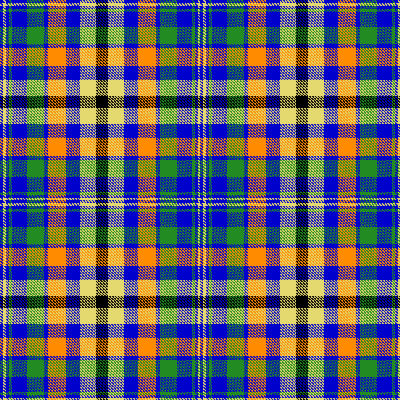
Generative tartans are produced by mutating valid thread counts.
The mutation engine operates on the parsed sett structure, not
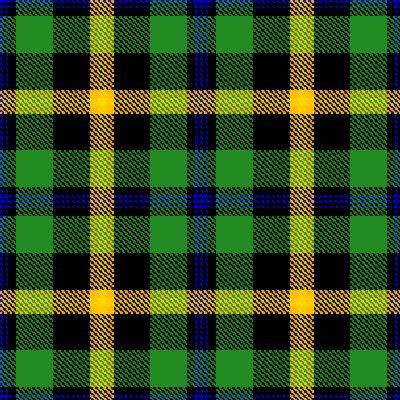
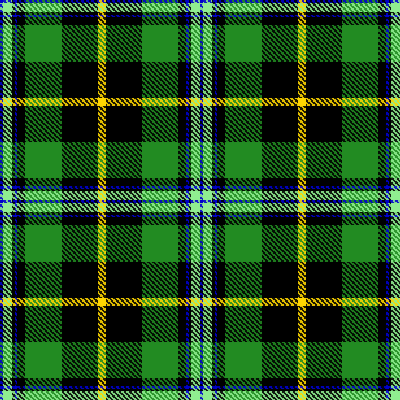
raw text. Four operators: color shift swaps one
dye code for an adjacent hue within the same STA color family
(e.g., B→LB, staying within blues). Run
scale multiplies or divides a single thread count by 2,
clamped to the range [2, 48]. Stripe insert adds
a new color band (drawn from the palette, width 2-6 threads) at
a random position within the half-sett, then mirrors it to
maintain symmetry. Sett transpose rotates all
color assignments by n positions in the palette while
preserving the proportional structure. Every mutation preserves
the pivot-symmetric constraint. The result is always a valid
tartan, never mere plaid.
The boundary between "valid tartan" and "plaid that happens to
look like tartan" is narrow. Remove the symmetric pivot and you
have asymmetric check. Use a plain weave instead of twill and you
lose the diagonal interlacing that gives tartan cloth its drape
and depth. Use colors outside the historical palette and the
result reads as costume, not cloth. The generator enforces all
three constraints: symmetric sett, twill‑family weave,
period palette.